


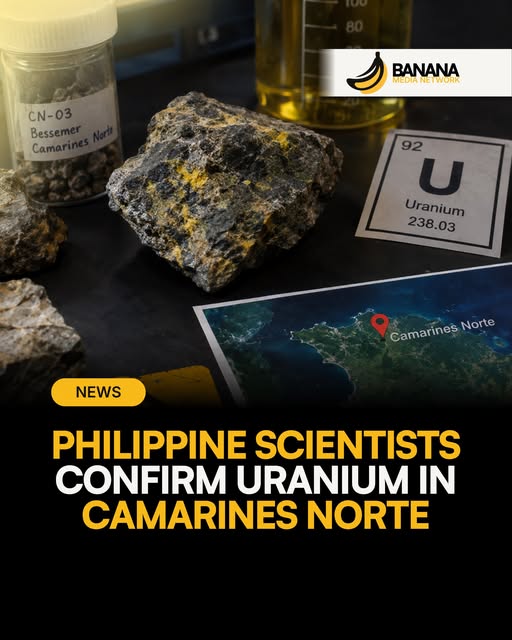
NEWS | Researchers from UP Diliman, DOST-PNRI, and Japan's Akita University confirmed uranium bearing minerals in rock samples from Bessemer in Jose Panganiban, Camarines Norte. They also tested a two step lab process that raised the uranium content of the material from 244 parts per million to 305, recovering about 73 percent of the uranium along the way. The work was funded by DOST and published in a science journal this year.
The team collected about 180 kilograms of rock from a strip roughly half a meter wide, then separated out copper, molybdenum, and iron rich minerals so the uranium ended up more concentrated in what was left. Scientists have studied uranium in this area since the 1950s, so the location is not new. What is new is a working local method for concentrating it.
BMN thinks the excitement needs a reality check. The result is not yellowcake, the material used to make nuclear fuel, and the researchers themselves say it does not prove there is enough uranium underground to be worth mining. Only drilling can answer that.
The timing makes it interesting. The Philippines is aiming for 1,200 megawatts of nuclear power by 2032 and 2,400 by 2035, and a homegrown uranium source would matter a lot if it turns out to exist. BMN also thinks people living around Larap should be part of that conversation early, before drilling talk turns into mining plans.
With nuclear power planned within a few years, how long will it take to find out if the uranium under Camarines Norte is worth digging for, and who gets a say when it is?
Your picture beside a comment comes from Gravatar, matched to the email you signed in with. Set one there and it appears here; without one you get your initials. How we handle this