


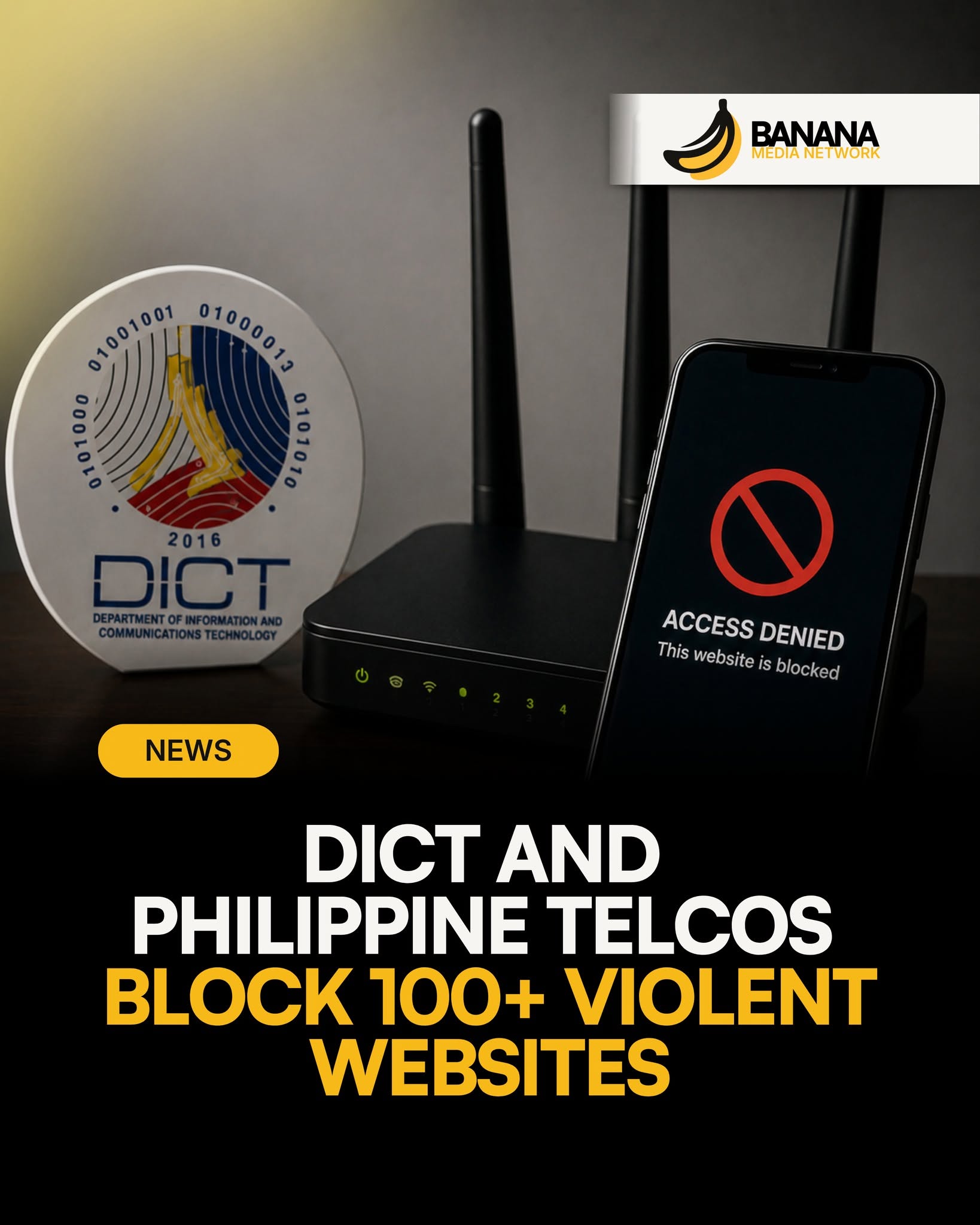
NEWS | The Philippines' biggest telecom and internet companies are ramping up efforts to block websites that stream extreme violence, working alongside the Department of Information and Communications Technology to protect children and other vulnerable users online. The push follows a fatal shooting at a school in Zamboanga on August 18, 2026, in which two students died and the attacker livestreamed the incident.
PLDT and its wireless arm Smart Communications said they are blocking more than 100 websites found to be hosting or streaming footage of school shootings and similar violence, with the list expected to grow. Globe Telecom is also expanding its blocking efforts, building on work that already removed over 438,000 domains and web links tied to child sexual abuse material in 2025, backed by more than 2.7 million dollars in filtering investment. Converge FiberX said it blocked nearly 12 billion attempts to reach harmful sites last year and continues coordinating with DICT and other agencies.
The blocking happens directly at the network level, meaning flagged sites become inaccessible to subscribers without needing separate parental control apps. Officials and telcos say this marks a shift toward faster, more coordinated action between government and industry whenever new violent content appears online.
BMN's view is that this coordinated approach could set a precedent for how the Philippines handles online harm going forward, though it also raises fair questions about who decides what gets blocked and how transparent that process should be, concerns already voiced by digital rights advocates.
How much control should telcos have over what content Filipinos can access online, and who should be watching that power?
Your picture beside a comment comes from Gravatar, matched to the email you signed in with. Set one there and it appears here; without one you get your initials. How we handle this