


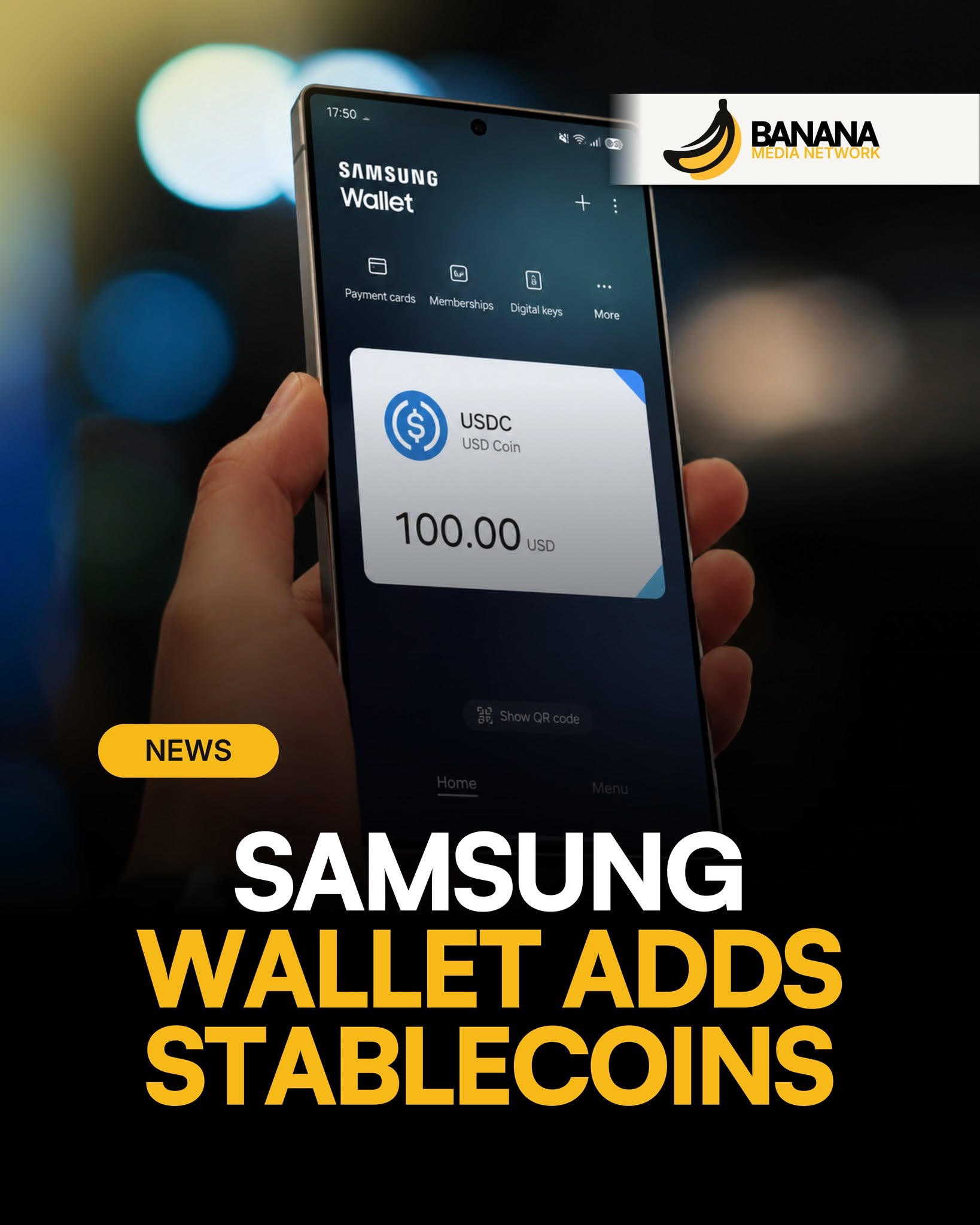
NEWS | Samsung has confirmed that stablecoin support is coming to Samsung Wallet, bringing digital dollars closer to everyday mobile users. During its Galaxy Unpacked presentation, the company previewed a wallet interface showing USDC, although it has not yet announced a launch date, supported regions, or additional stablecoins.
The update builds on Samsung Wallet's role as a hub for payment cards, IDs, keys, and digital passes. By adding stablecoins, Samsung is expanding the app beyond traditional payments and giving Galaxy users a way to manage digital assets from the same place they already use for daily transactions.
For users, this could make stablecoins easier to access without relying on a separate crypto wallet. It also raises the pressure on wallet providers to deliver a simpler and more connected experience as major consumer brands continue bringing digital assets into familiar apps.
Samsung's move signals that stablecoins are no longer being treated as a niche crypto feature. When one of the world's largest smartphone makers embraces them, it could encourage more businesses, developers, and device makers to explore similar integrations, pushing digital payments further into the mainstream.
Will built-in stablecoin support become a standard feature on every smartphone, or will users still prefer dedicated crypto wallets?
Your picture beside a comment comes from Gravatar, matched to the email you signed in with. Set one there and it appears here; without one you get your initials. How we handle this