


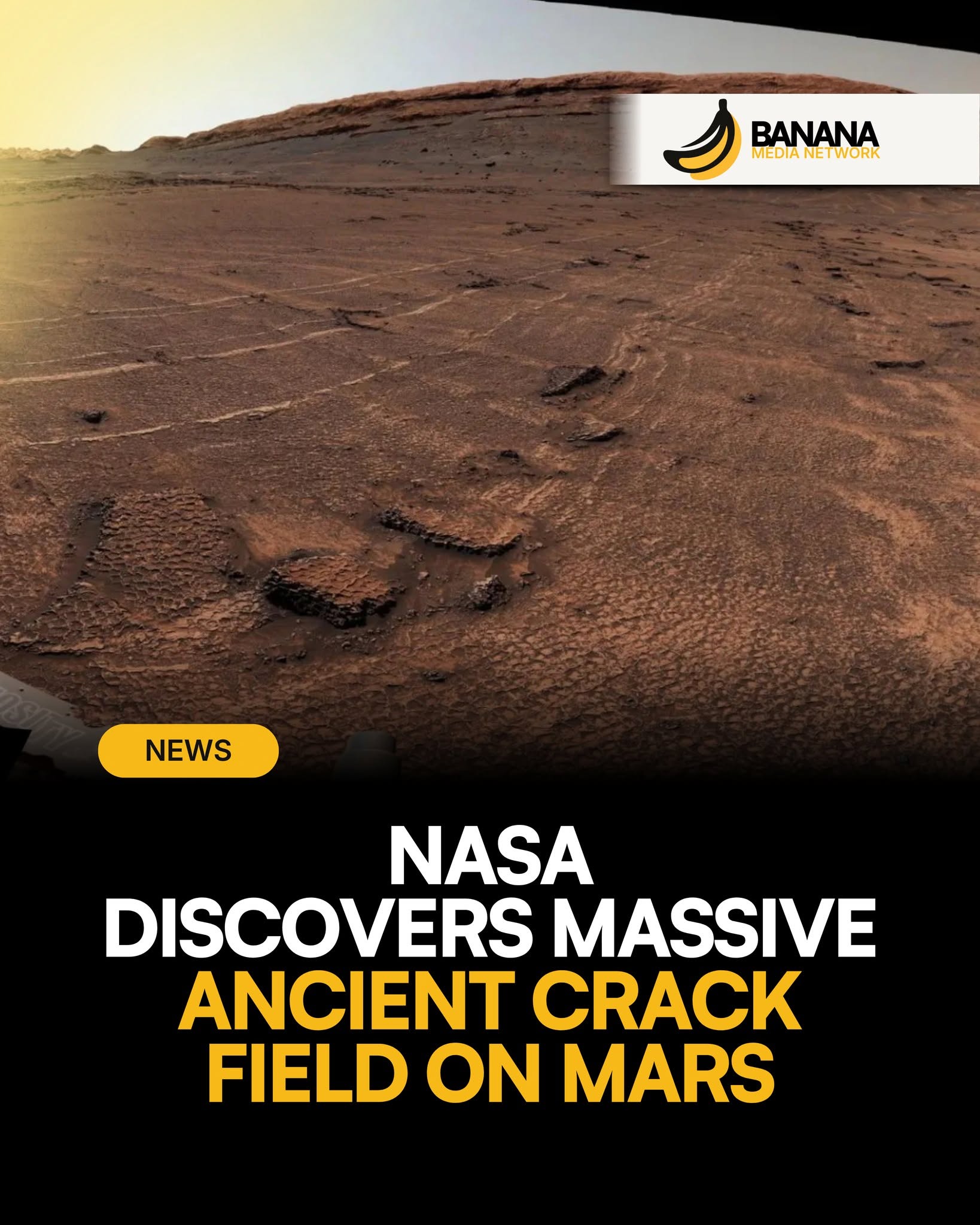
NEWS | NASA's Curiosity rover has discovered the largest area of honeycomb-like cracks ever seen on Mars. The patterns were found in a valley called Valle Grande, where the ground is covered with countless polygon-shaped fractures stretching as far as the rover can see. Scientists believe these formations could hold important clues about what Mars looked like billions of years ago.
Curiosity has spotted similar patterns before, but only in small areas. This newly discovered field is far bigger, giving researchers a rare chance to study how these cracks formed. The team is now examining the rocks and their chemical makeup to determine whether the shapes were created by repeated wet and dry cycles, changing temperatures, or other natural processes.
If the evidence points to ancient water, it would strengthen the case that Mars once had conditions that may have supported simple life. It would also improve scientists' understanding of how the planet's climate changed over time and help guide future missions searching for signs of past habitability.
The discovery also has practical value. Knowing where water may have once existed helps scientists choose future landing sites and could shape long-term plans for human exploration. Every new clue brings researchers closer to understanding whether Mars was once more Earth-like than it appears today.
Mars continues to reveal hidden chapters of its past. If these cracks are signs of ancient water, could the next major discovery on Mars change how we see life in the universe?
Your picture beside a comment comes from Gravatar, matched to the email you signed in with. Set one there and it appears here; without one you get your initials. How we handle this