

Nvidia (NASDAQ: NVDA) has ended all sales of its advanced H200 artificial intelligence processors into China, closing a controversial licensing channel that had drawn bipartisan scrutiny in Washington and preceded a major leadership transition at the chipmaker. Interim Chief Executive Officer Colette Kress confirmed the policy shift during Nvidia's quarterly earnings call on November 18, 2026, alongside the formation of a new board-level committee dedicated to national security policy, export-control compliance, and global trade risks, according to Nvidia Investor Relations disclosures. The decision reshapes global artificial intelligence hardware supply chains at a moment when U.S. regulators are aggressively tightening controls over cross-border compute access.
How Did Nvidia's H200 China Licensing Channel Operate?
The H200 is a high-bandwidth Hopper-architecture graphics processing unit (GPU)—the specialized processor used to train and run large language models—equipped with 141 gigabytes of HBM3e memory. Unlike Nvidia's flagship Blackwell processors, which remained subject to a strict presumption of denial, H200-class chips became conditionally eligible for export to approved Chinese buyers under a case-by-case review rule published by the U.S. Department of Commerce Bureau of Industry and Security (BIS) in January 2026.
Under that framework, H200 shipments bound for China required pre-export U.S. inspection and were subject to a 25% import tariff established under Federal Register Proclamation 11002. However, large-scale commercial deployment stalled almost immediately. While U.S. officials approved select export licenses, Beijing withheld broad import clearance, leaving an estimated 600,000 H200 units warehoused in Hong Kong and generating less than 1% of Nvidia's data center revenue in recent quarters, per Nvidia Securities and Exchange Commission (SEC) Form 10-Q filings.
Why Did Nvidia Exit the China H200 Market Now?
Nvidia's withdrawal follows an acute governance crisis and mounting congressional pressure over export-control enforcement gaps across technology supply chains:
- Leadership Transition & Board Oversight: On November 8, 2026, Nvidia's board announced an independent review into alleged foreign intelligence targeting involving co-founder and longtime CEO Jensen Huang, who resigned on November 12, elevating Chief Financial Officer Colette Kress to interim CEO.
- Diversion & Blacklist Scrutiny: Public procurement records and congressional inquiries examined how small quantities of restricted H200 and H100 processors reached blacklisted Chinese defense-linked universities through domestic intermediaries, as well as whether shell assemblers received U.S. export clearances without active physical operations.
- Congressional Records Demands: Three U.S. House committee chairs scheduled a closed-door oversight briefing for November 18 and formally requested that the Commerce Department preserve all records tied to H200 license approvals and tariff collections.
Nvidia AI Accelerator Status for China (November 2026)
How Nvidia's product lineup stands under U.S. export controls and corporate compliance policy.
| Chip Architecture | Current China Status | Key Regulatory or Corporate Trigger |
|---|---|---|
| Blackwell (B100 / B200 / GB200) | Fully Restricted | Presumption of denial; overseas subsidiary loophole closed May 2026. |
| Hopper H200 | Halted by Nvidia | Corporate sales exit confirmed Nov. 18, 2026; ~600,000 units stalled in Hong Kong. |
| Hopper H20 (China Variant) | Case-by-Case License | Subject to U.S. export licensing and 25% Section 232 inspection tariff. |
| Third-Country Data Centers | 90-Day License Window | Nov. 16, 2026 BIS rule restricts remote compute across 12 countries. |
By exiting H200 sales to China entirely and establishing a dedicated board committee on trade compliance, Nvidia is moving to insulate its core North American, European, and allied data center business from legislative retaliation.
How Are New U.S. Data Center Rules Expanding the Chip Ban?
Nvidia's corporate pullout coincides with a sweeping regulatory expansion by the Commerce Department. On November 16, 2026, BIS issued an interim final rule requiring data center operators across 12 third-party nations—including Singapore, Malaysia, Thailand, Indonesia, and Brazil—to secure a U.S. government license before purchasing advanced AI accelerators for high-compute clusters.
The rule targets "remote compute" workarounds, in which Chinese AI developers lease cloud capacity from overseas facilities rather than importing restricted chips directly onto the Chinese mainland. Existing data center operators offering covered compute services have a 90-day compliance window to apply for federal licenses, though chips destined for U.S.-headquartered cloud providers and standard commercial recommendation engines remain exempt.
What Comes Next for Nvidia and Global AI Infrastructure?
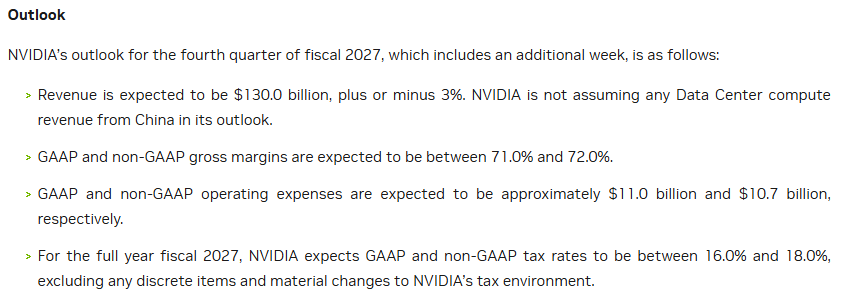
For Nvidia, forfeiting the China H200 channel removes a persistent compliance liability without materially altering near-term revenue guidance, which already assumed negligible China data center contributions. For cloud operators across Southeast Asia and Latin America, however, the new BIS licensing mandate introduces immediate regulatory friction, forcing regional operators to audit customer end-use and compute thresholds within 90 days. Meanwhile, lawmakers in Washington continue advancing bipartisan legislation—including proposals for mandatory hardware-level location tracking and stricter multilateral equipment curbs—that could further harden global semiconductor boundaries in 2027.
As Washington closes both direct chip sales and overseas cloud workarounds, can Asian data center operators comply with U.S. licensing rules without surrendering regional AI competitiveness?