


I can see why a new National AI Council would get a rough welcome online.
Imagine worrying about your job while reading another headline about a council. You may have one question before you reach the second paragraph: what will this do for me?
I think that question sits under much of the anger in the reactions shared with me.
One post uses a joke about an AI council. Another takes aim at people who claim to speak for the community but may serve powerful interests. The tone is sharp. The issue underneath is trust. I would be careful about calling two posts the voice of the whole country. But I would be just as careful about brushing them off. Anger can point to questions a press release missed.
Who gets a seat? Who gets heard? Who gets the help?
I read EO 131 because I wanted to see what had been created. The answer is a body that brings government agencies together to guide and track AI work. It is not a magic desk for every AI problem. Existing regulators keep their jobs. The council has work to do before people feel its value.
I made that clear in my DZMM interview. I welcomed the move and said business had waited for it. I also said we still have to see what ordinary people will feel.
I stand by that answer. It leaves room for hope and for hard questions.
Government offices need to work together. If each one goes its own way, we can end up with clashing plans and wasted effort. A shared plan is useful. I just want to see it leave the meeting room.
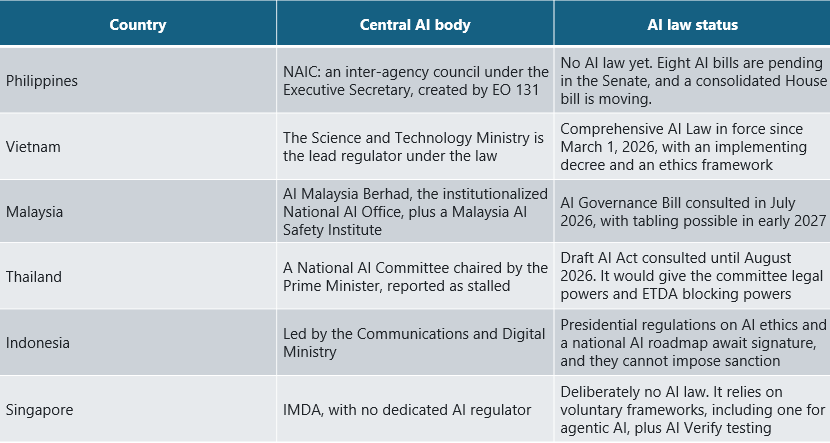
The ASEAN table gives this story some context. Vietnam has an AI law. Malaysia has a national AI body and is working toward a law. Thailand has a committee and a draft act. Indonesia's digital ministry leads its effort. Singapore uses guidance and testing tools.
That tells me there is more than one way to do this. We should learn from our neighbors while asking what works for our own needs. A council is one tool. Its value depends on what people do with it.
In my interview, I discussed skills, jobs, scams, and weak internet. Those are things people can picture without a policy degree.
Can a worker take a useful class without losing pay? Can a small shop get help choosing a tool? Can a student learn how to check an AI answer? Can a scam victim find the right office? These are the questions I want on the council's desk.
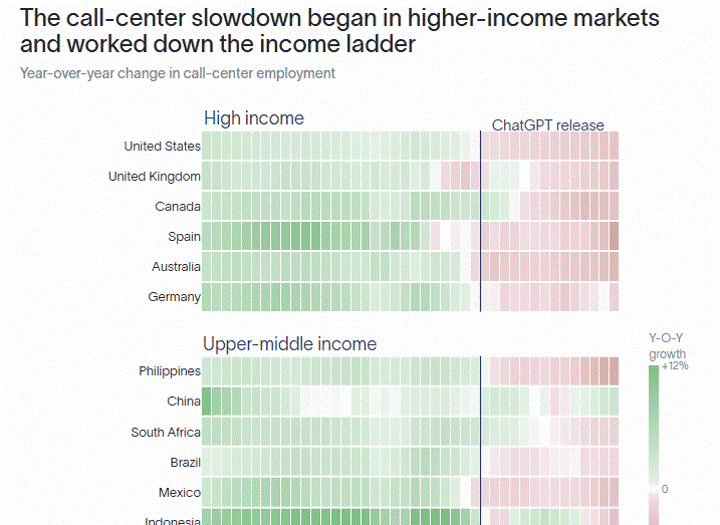
I want care with big claims. I mentioned a reported fall in contact center jobs and raised AI as a possible reason for it. That needs checking. A scary number should not become proof just because it fits a fear.
The fear itself still deserves respect. People need honest talk about work, along with plans they can use.
EO 131 sets up five working groups and asks for goals, dates, and reports. Good. Now let people see the useful parts of that work. Tell us who is doing what. Tell us when it should be done. Tell us when it goes wrong. Let workers and small firms shape the plans, then show where their views made a difference.
I do not expect one council to fix every problem with AI. I do expect it to explain its work without hiding behind big words. I would like leaders to answer people in the same plain language they use at home. If a plan needs ten slides before anyone can tell who it helps, the public has every right to ask for a much clearer answer from those leaders.
I can welcome the council and still ask it to earn my trust. A signed order opens the door. The next step is giving people a reason to walk through it.
(Video credit: DZMM Teleradyo)
About Me:
Dominic “Doc” Ligot is one of the leading voices in AI in the Philippines. Doc has been extensively cited in local and global media outlets including The Economist, Channel News Asia, South China Morning Post, Washington Post, and Agence France Presse. His award-winning work has been recognized and published by prestigious organizations such as NASA, Data.org, Digital Public Goods Alliance, the Group on Earth Observations (GEO), the United Nations Development Programme (UNDP), the World Health Organization (WHO), and UNICEF.
If you need guidance or training in maximizing AI for your career or business, reach out to Doc via https://docligot.com.
Follow Doc Ligot on Facebook: https://facebook.com/docligotAI